Either way, it looks and sounds like a lot of TEAM BUILDING among elites plus a number of PRESCRIPTIVE PAIN SCENARIOS to straighten out not just ECONOMIES but SOCIETIES as well.
And note the abundance of GERMANIC ACCENTS. Is ORDER the OPERATIVE PARADIGM?
MY PRINCIPLE QUESTION: DOES TECHNOCRACY NOW OUTRANK THE ENLIGHTENMENT?
After watching the videos embedded in these tweets, how can one NOT say YES?
NEW – Klaus Schwab tells attendees at his World Economic Forum in Davos that "the future is being built by us." pic.twitter.com/yIqB4jclNd
During a World Economic Forum panel on the energy crisis, German vice-chancellor Robert Habeck said countries should resist temptation to look after their own interests first. He added sustainability requires change to the "rule of the markets." pic.twitter.com/BYzQqMRDbk
Speaking about small and medium businesses in Davos, Norwegian finance CEO Kjerstin Braathen says energy transition will create energy shortages and inflationary pressures, but this "pain" is "worth it." pic.twitter.com/Ne70lRle5W
Alibaba Group president J. Michael Evans boasts at the World Economic Forum about the development of an "individual carbon footprint tracker" to monitor what you buy, what you eat, and where/how you travel. pic.twitter.com/sisSrUngDI
On the World Economic Forum's panel on a "Reimagined Global Tax System," Oxfam executive director Gabriela Bucher calls for a global 25 per cent corporate tax rate and complains that countries are lowering taxes to be competitive. pic.twitter.com/zuJqsdXlUM
Australian eSafety commissioner Julie Inman Grant tells the World Economic Forum we need a "recalibration" of freedom of speech. pic.twitter.com/zEq72wFhNf
A CNN anchor, the chairman of Credit Suisse, and France's top central banker giddily discuss the arrival of central bank digital currencies within five years at the World Economic Forum in Davos. pic.twitter.com/nKPN2qRUI3
For those who HAVEN’T been asleep under a rock since the dotcom crash, the take here will in no way surprise, yet it’s still worth noting.
The piece’s key points:
“The actions of the authorities in developed countries, essentially an extension of the Keynesian economic policy discourse, have brought the economies into disrepute.”
“The government is making money cheaper, just to maintain electoral support.”
“Before COVID times, such imbalances over the past 20 years were bought with new leverage, and the imbalances went away for a while, giving birth to inevitable new imbalances in the future.”
“In СOVID times, however, all that has changed. Another injection of mega liquidity, the cheapening of money by all possible means – from direct budgetary donations to the inflating of the Fed’s balance sheet – occurred against a background of blocked demand, rather than falling due to economic stagnation. As a result, the savings of all agents increased abnormally, people stopped wanting to work, the flow of investment into the stock market and into financial assets increased, creating hyperinflation in them and moving them away from their fair value.”
“At the same time, instead of reducing its clumsy intervention, the government, on the contrary, increases social programs and government spending in the form of infrastructure projects. In this way it depresses business through the inevitable increase in the tax burden and further contributes to the compression of supply, reducing efficiency, the desire to invest and, in general, worsening business expectations and expanding the mandate and the number of bureaucratic entities.”
Despite the considerable awareness — not to mention reasoning acumen and wisdom — reflected in each of the above points, it’s the following one I find most TRENCHANT:
“Against this same backdrop, by continuing its conciliatory policy with resource autocracies, the government is forcing a green agenda at the worst possible time, underfunding both conventional and alternative energy, which cannot cover the current need for the capacity provided by conventional energy. A cursory reading of Klaus Schwab’s The Great Reboot is enough to understand the inadequacy of such a utopian concept, the adherence to which, as we can see, leads to anti-utopian consequences.”
YES, THE FOOL’S ERRAND OF OUR OBSESSION WITH A GREEN ENERGY INITIATIVE THAT CAN’T POSSIBLY BE ACHIEVED IN THE MANNER INTENDED OR IN THE TIMEFRAME PRESCRIBED.
So then, where does this leave us?
“Stagflation is already a fact today; recession is inevitable tomorrow. Social discontent, which will inevitably happen and is already taking place in various parts of the Western world, will force governments to continue to care about today without thinking about tomorrow – and to continue the policies of populism and leftist expansive discourse, which will inevitably lead to even greater leverage and exacerbate economic, and therefore social, imbalances.”
“As a result, Western economies are faced with a dilemma as never before: to continue state expansion and addiction treatment with a new dose, or to start bringing the economy into balance.”
THIS IS NOT ONLY A UNIQUE DILEMMA BUT AN EXISTENTIAL ONE. TO CONTINUE TO “KICK THE CAN” WILL ONLY ENSURE AN EVEN MORE CALAMITOUS OUTCOME OVER TIME. THE GLOBAL ECONOMY MUST BE BROUGHT INTO BALANCE AT ALL COST.
TROUBLE IS, THIS CAN’T OCCUR A) BUT AT GREAT COST and B) WITHOUT THREATENING OUR BASIC INSTITUTIONS AND WAY OF LIFE. IN OTHER WORDS, WE’RE TALKNG A QUINTUPLE BYPASS AT 75 VERSUS LIVING WITH A BAD HEART.
AND WE ALL KNOW THAT IF WE TAKE THE “PAY ME NOW” ROUTE, THE REBALANCING COSTS WILL BE BORN MAINLY BY THOSE WHO ARE SUFFERING THE MOST ALREADY. BUT IT’S EITHER THAT, OR THE WORLD SIMPLY STOPS WORKING.
SINCE POWER STILL LIES WITH THOSE WHO OWN THE MOST, DON’T EXPECT THE WORLD TO STOP WORKING. AND, TO BE SURE, MILLIONS WILL BE SACRIFICED TO ENSURE THAT IT DOESN’T.
Two decades ago, neither was a WEAPON OF CHOICE in a war over whether or not the US could maintain control of a UNIPOLAR NEW WORLD ORDER.
Today, according to Louis-Vincent Gave at Gavekal Research, all bets are off regarding that war, including how it’s now being fought.
And, if as Gave argues, the various conflicts we see today are merely parts of a single OVERARCHING WAR, are the US and its allies STILL HOLDING SERVE, or is a SUCCESSORMULTIPOLAR ORDER about to replace them?
Investors today must deal with the effects of not one, but two wars, as my Gavekal-IS colleague Didier Darcet pointed out in April (see Tick,Tock Tick,Tock).
The first is the one we can see playing out each day on our television screens, with all thetanks, deaths and human suffering.
The second is a financial war, with the unprecedented weaponization of the Western banking system and Western currencies aimed at bringing Russia to its financial knees (see CYA As A Guiding Principle (2022)).
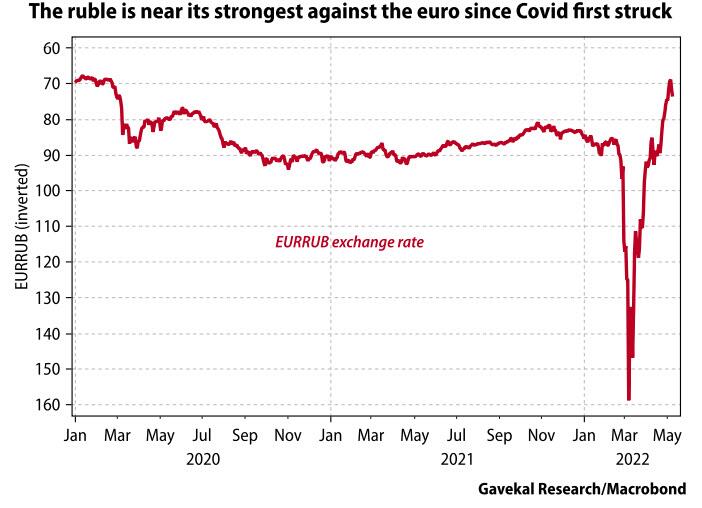
To the surprise of most people in the West, resistance against both of these war efforts has proved far stronger than expected. Almost 11 weeks into the war on the ground in Ukraine, Russian troops still seem to be taking heavy losses for relatively small territorial gains. And a little over six weeks after US president Joe Biden boasted that the ruble had been “reduced to rubble” by Western sanctions, the Russian currency is close to a two-year high against the US dollar and near a post-Covid high against the euro.
TUDOR PLACE: Gave continues.
The Evolution of Warfare
“The technological superiority of the machine gun allowed Britain, and France, Germany and Belgium, to subjugate almost all of Africa, even though outnumbered by the Zulu, Dervish, Herero, Masai and even Boer forces they opposed. All were rendered helpless by the machine gun’s firepower.”
“Today, one of the main reasons why Taiwan, South Korea, Japan, Saudi Arabia, the United Arab Emirates and others keep so much of their reserves in US dollars is that the US is widely regarded as being a generation (if not more) ahead of the competition in the design and production of smart bombs, anti-missile systems, fighter jets and naval frigates.
“In short, the superiority of US weaponry has been one of the principal factors underpinning the US dollar’s status as the world’s reserve currency. However, recent events raise important questions about whether the US can retain this superiority.
TUDOR PLACE:Each of these events just mentioned has involved the USE OF CHEAPLY PRODUCED DRONES.
The Yemeni Houthi attack on the Aramco processing facilities in Abqaiq
Azerbaijan’s defeat of Armenia despite the latter’s larger army and more lethal armaments
The Houthi attacks at the Saudi oil terminal at Ras Tanura
The Ethiopian government’s recent successes in its ongoing civil war
The Houthi attacks on oil facilities in the UAE
Back to Gave:
“Over the years you have spent tens, if not hundreds, of billions of US dollars purchasing anti-missile and anti-aircraft systems from the US. Now, you see relatively cheap drones penetrating these defense systems like a hot knife through butter. This has to be frustrating. What is the point of spending up to US$340mn on an F-35c (and US$2mn on pilot training), or US$200mn on an anti-aircraft system, if these can be taken out by drones at a fraction of the cost?”
“This evolution in warfare may help to explain the impressive resilience of the Ukrainian army in the face of Russia’s onslaught . . . Could this be because Putin failed to factor the impact of drones into his military outlook?”
“But judging from afar, it appears inexpensive Turkish drones have helped level the battlefield in the Ukrainian-Russian David versus Goliath confrontation— the biggest and bloodiest on European soil since World War II.”
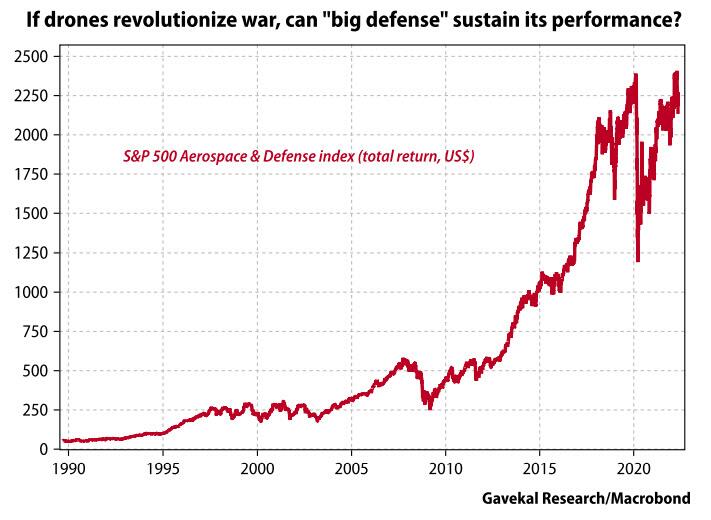
“If ever-cheaper and more readily available drones are going to revolutionize war, much as the Maxim gun did 140 years ago, then it is questionable whether it still makes sense to invest in tanks, airplanes, anti-aircraft and anti-missile systems. If it does not, what does this mean for the value of the large, listed death-merchants?
“In a world where military might is no longer the monopoly of a single superpower, or the duopoly of two, does the world become, de facto, multipolar? In such a world, would there still be a compelling reason for trade between Indonesia and Malaysia to be settled in US dollars, rather than in their own currencies? Wouldn’t trade between China and South Korea now be settled in renminbi and won?”
The Dramatic Shift in the Global Financial Landscape
“Seeing your country’s entire middle class wiped out in the space of a few weeks—which is what happened in Thailand, Indonesia, Russia, Argentina and others in the period from 1997 to 2000—is bound to leave a few scars.”
“To ensure their countries’ middle classes were never again wiped out, they adopted a straightforward set of policy prescriptions that in the early 2000s Gavekal dubbed the The Circle Of Manipulation. It went something like this:
1) To avoid a future crisis, your central bank needs to maintain a healthy safety cushion of hard currency bonds, mostly US treasuries and bunds.
2) The more you become integrated with the global economy, the larger this cushion should be.
3) To build up this safety cushion, you need to run consistent and large current account surpluses.
4) To run consistent large current account surpluses, you need to maintain an undervalued currency.”
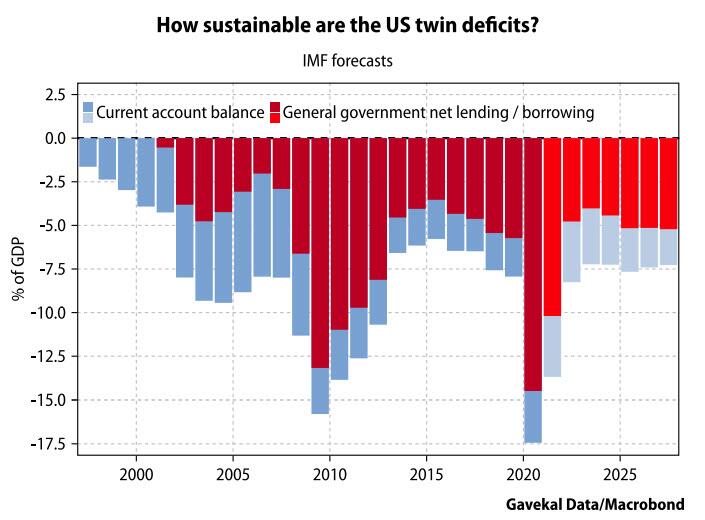
TUDOR PLACE: That “someone else” has been the US utilizing the primacy of the US Dollar as the world’s reserve currency. But how much longer can the US continue incurring massive debts in its effort to maintain its vice-like control of the global monetary system?
Specifically . . .
Back to Gave:
“To cut a long story short, for the last 25 years, we have lived in a world in which undervalued currencies in emerging markets allowed Western consumers to buy attractively priced goods and services imported from developing countries.”
“But this perception of safety may now be changing in front of our eyes.”
First . . .
Second, the “confiscation of Russia’s reserves” has raised concerns that “any country that is not an outright US ally—China, Malaysia, South Africa and others—and even some historical friends—Saudi Arabia? The UAE? India?—will think twice before reflexively accumulating US treasuries from fear they may get canceled.”
Third, by abusing property rights, the US has has raised concerns among private actors as well. “If the wealth of Russian oligarchs can be confiscated so abruptly, then why not the assets of Saudi princes?”
Fourth, to counter sanctions, Russia is “requiring buyers from “unfriendly” countries to pay for their purchases of Russian commodities in rubles. And in effect, the only way unfriendly customers can acquire rubles is by offering gold to the Russian central bank (see The Clash Of Empires Intensifies).”
“For decades, global trade was simple. If Russia produced commodities that China needed, then China first had to earn US dollars by selling goods and services to the US consumer. Only in this way could it acquire the US dollars it needed to purchase commodities from Russia. But what happens now that China or India can purchase their commodities from Russia or Iran for renminbi or Indian rupees? Obviously, their need to earn and save US dollars is no longer so acute.”
Conclusion
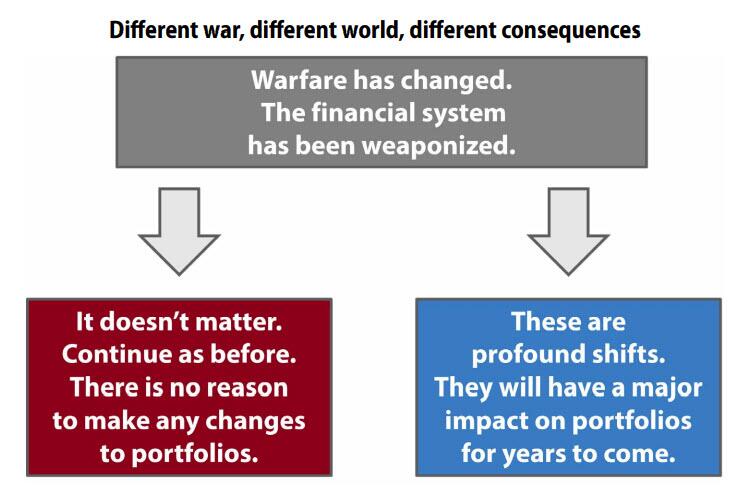
“Warfare is changing and the financial system has been weaponized like never before.”
“The Ukraine war may be telling us that modern history’s unipolar age is now well and truly over.”
“For 25 years, emerging market workers have subsidized consumption in developed markets, as emerging market policymakers kept their currencies undervalued and recycled their current account surpluses into “hard” currencies. If this arrangement now comes to an end, then the developed market consumer will struggle while the emerging market consumer will thrive.”
“Much consumption in emerging markets tends to occur at the ‘low end’ of the product chain. This plays into a theme I have been harping on about for the last year: that investors should focus on companies that deliver products that consumers ‘need to have’ rather than products that are nice to have.‘”
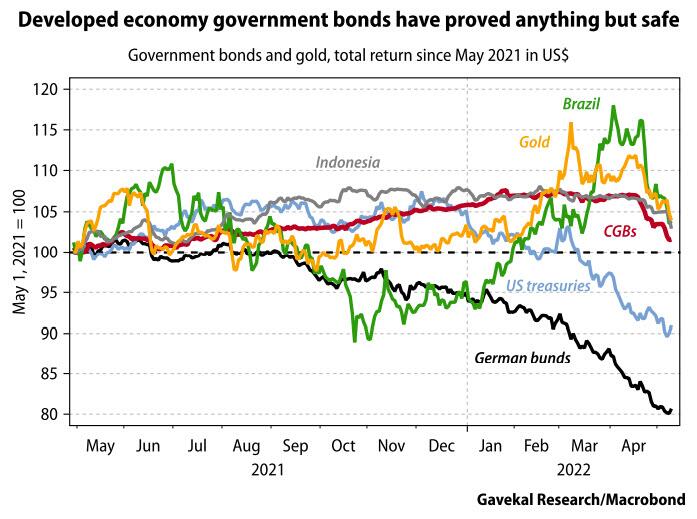
“Over the last two years, US treasuries and German bunds have failed in their job of providing the antifragile element in portfolios . . . Today, investors need to look elsewhere for antifragile attributes. Precious metals, emerging market government bonds, high-yield energy assets and foodstuffs are all leading candidates.”
“High-end residential real estate in Western economies will lose the emerging market money-recycling bid and will struggle.”
“New safe destinations for emerging markets’ excess capital will emerge. Obvious candidates include Dubai, Singapore, Mauritius, and perhaps even Hong Kong (should China eventually decide to follow the rest of the world and to live with Covid).
TUDOR PLACE: Overall, Gave makes a concise, thorough argument but no stronger than Michael Every’s recent treatment of roughly the same material which I posted on 05-19-22.
In other words, nothing in Gave’s analysis should be viewed as gospel given that in economics, geopolitics and political economy, THERE IS NO GOSPEL AS TO HOW AND WHEN ANYTHING WILL TURN OUT BUT ONLY LIKELIHOODS BASED ON CONSTANTS IN HUMAN NATURE.
🚨We need all eyes on this.@NYPDDetectives need your help identifying & locating this man who is wanted for homicide in the tragic, senseless shooting of a man on a “Q” train that was approaching the Canal/Centre St. station on Sunday.
In fact, she argues against the LEGITIMACY of both the reaction to and interpretation of the George Floyd murder itself; and in doing so, attacks the Left’s favorite BETENOIRE, the NOTION of SYSTEMIC RACISM.
“Racism almost certainly explains the attack in Buffalo. Payton S. Gendron, the suspect who broadcast a livestream during the attack, claimed he had been plotting an ambush since January.”
“On the Saturday the shooting took place, I was in Dallas at a conference attended by a range of distinguished African Americans, ranging from Glenn Loury to the Supreme Court Justice Clarence Thomas. The key question we addressed was the following: what is holding back black America? The answer, it quickly became clear, had little to do with the phantom of systemic racism.”
“We started by acknowledging the huge progress that blacks in America have made since desegregation in 1964. We have had a black president who won landslide elections and remains popular. We have two black Supreme Court justices. We have black billionaires, academics, media personalities, actors and comedians.”
“What explains this disproportionate representation of black Americans?”
“Thrown into a frenzy by their overzealous conviction that white racism is the root cause of all evil,BLM turned a blind eye to the large number of black Americans who were being killed, or who found themselves forced to live in neighbourhoods terrorised by gangs.”
“There were no protests or demands for meaningful policies to make black neighbourhoods safer.”
“As Professor Fryer explained in Dallas at the weekend,there are racial differences in the use of non-lethal force by police officers, with blacks largely at a disadvantage, but not in officer-involved shootings.”
“In his speech afterwards, Shelbey Steele, the author of White Guilt, summarised the implications of this reality: despite the fact that some racism does still persist, America remains the best country in the world to be black.”
“For black Americans to progress, we need to cast off today’s dependency on white guilt for recognition and support.”
“What is the way forward if you accept that blacks in America are free? It is to have the courage to live that freedom. It means holding ourselves accountable for our behaviour. It means learning to shape our destiny regardless of skin colour. And it means ignoring the divisive rhetoric propagated by those such as Patrisse Cullors, Kamala Harris and Ibram X Kendi.”
“Democrats are keen to turn the Buffalo shooting into another George Floyd moment: an excuse to deflect difficult questions, and to turn politics into a binary realm of Good and Evil. Once again, we’re told, either you’re with us or you’re a racist — even if being on the side of Good means exploiting the misery of others.”
TO MAKE THIS ARGUMENT TO A “PROGRESSIVE”, THOUGH, IS TO WASTE YOUR WORDS AND YOUR TIME. STILL, EVERY NOW AND THEN, ONE OR TWO WILL GET IT AND PRY THEMSELVES LOOSE FROM THE SIMPLISTIC, BINARY AND GROSSLY HYPERBOLIC NONSENSE PEDDLED BY THE LIKES OF CULLORS AND KENDI.
AND SO — THOUGH NOT AT ALL A RIGHTIST MYSELF — I KEEP POSTING.
Accept Stuart Kirk’s argument or not, it’s still worth hearing. And what IS his argument? That climate change ALONE will not cause investors to lose money.
Kirk is HSBC Asset Management’s head of responsible investment, and he’s addressing the FT’s Moral Money Summit Europe.
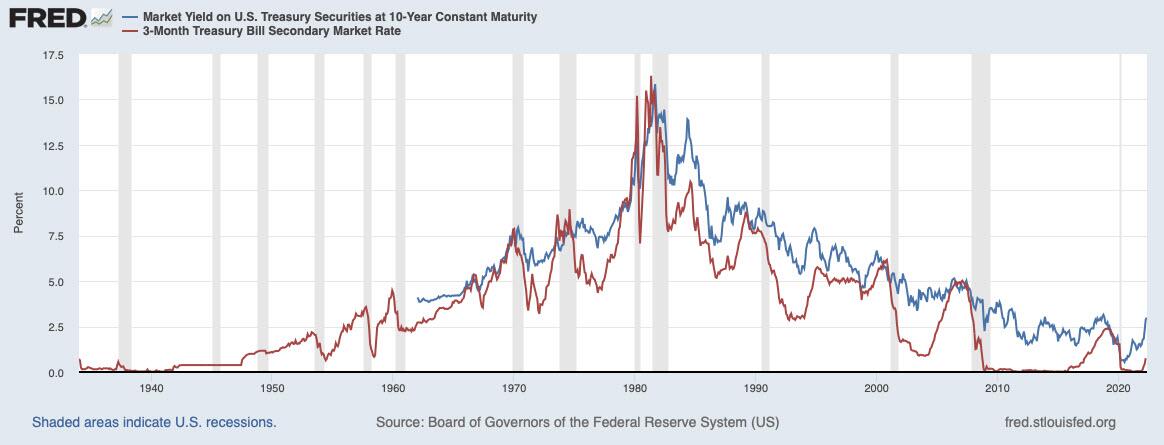
“The years between 1981 and 2020 were very special years for the world economy because interest rates were generally falling . . . . “
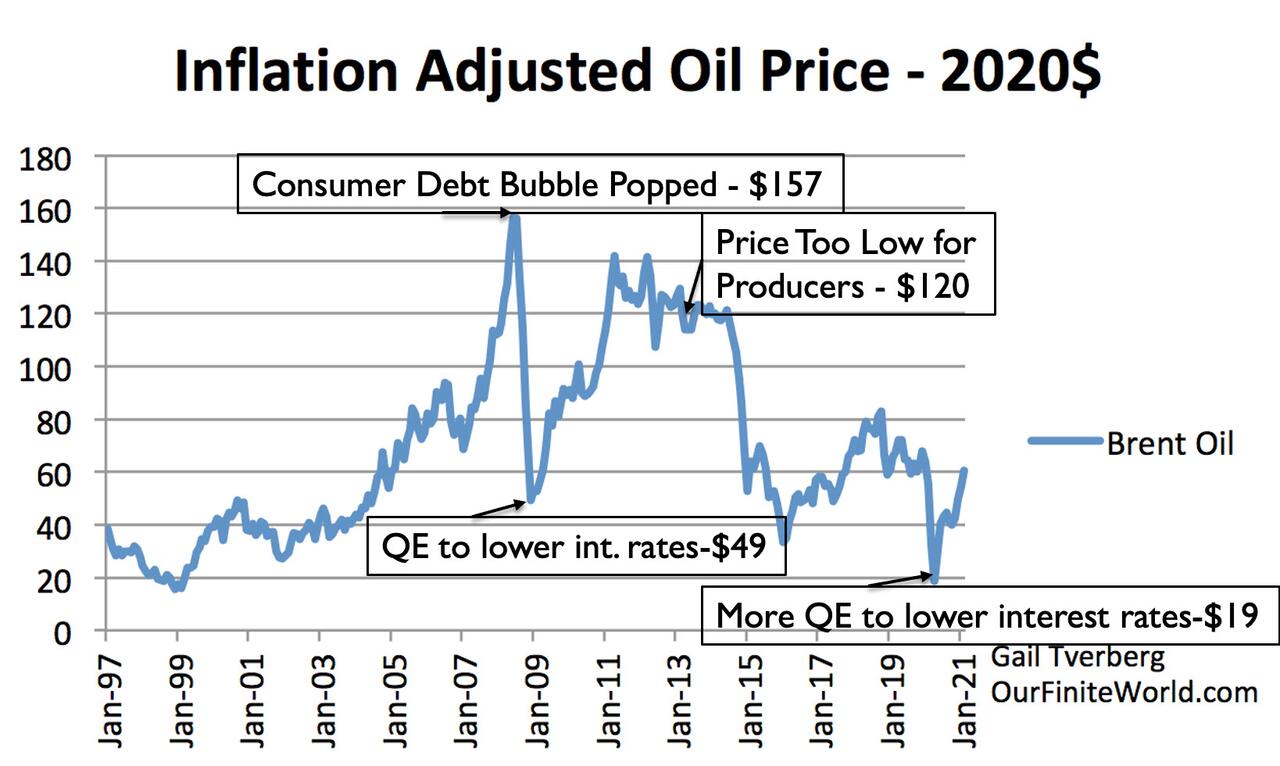
“With an ever-lower cost of debt, the economy has had a hidden tailwind pushing it long between 1981 to 2020. Now that interest rates are again rising, the danger is that a substantial portion of this debt bubble may collapse. My concern is that the economy may be headed for an incredibly hard landing because of the inter-relationship between interest rates and energy prices (Figure 2), and the important role energy plays in powering the economy.”
“Ever since civilization began, a combination of (a) energy consumption and (b) debt has been required to power the economy.”
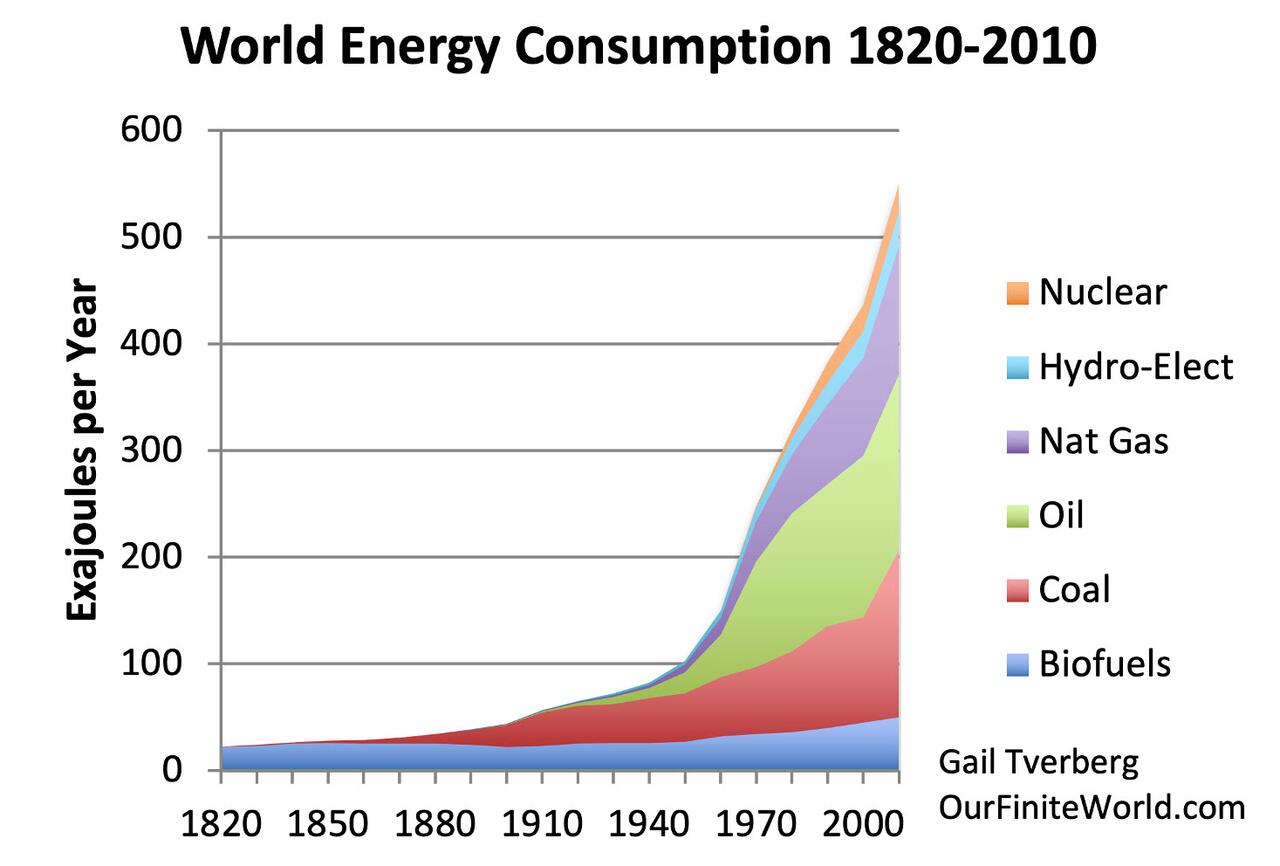
“Looking back, we can see the close relationship between total energy consumption and world total GDP.”
TUDOR PLACE: Can humanity stop growing? Is that a BIOLOGICAL possibility, let alone a social, economic or political one? Are we done if we STOP? Can we STAGNATE? Or will we simply continue to BURN THINGS and consume this planet, OUR HOST?
Whether we’re PROGRAMMED FOR GROWTH or not, we may be WELL PAST THE POINT of halting, let along reversing OVERSHOOT. And if so, we may soon find out if SUBSISTENCE LIVING can work on the heels of what’s been UNPRECEDENTED PLENTY.
“The need for debt or some other approach that acts as a funding mechanism for capital expenditures (sale of shares of stock, for example), comes from the fact that humans make investments that will not produce a return for many years.”
“The current plan of central banks is to raise interest rates aggressively. My concern is thatthis approach will leave commodity prices too low for producers. They will be tempted to decrease or stop production.”
TUDOR PLACE:This, in turn, as Gail points out will lead to:
Lower energy supply, due to cutbacks in production and lack of new investment
Lower food supply, due to inadequate fertilizer and broken supply lines
Much defaulting debt
Pension plans that reduce or stop payments because of debt-related problems
Falling prices of stock
Defaults on derivatives
TUDOR PLACE: She continues:
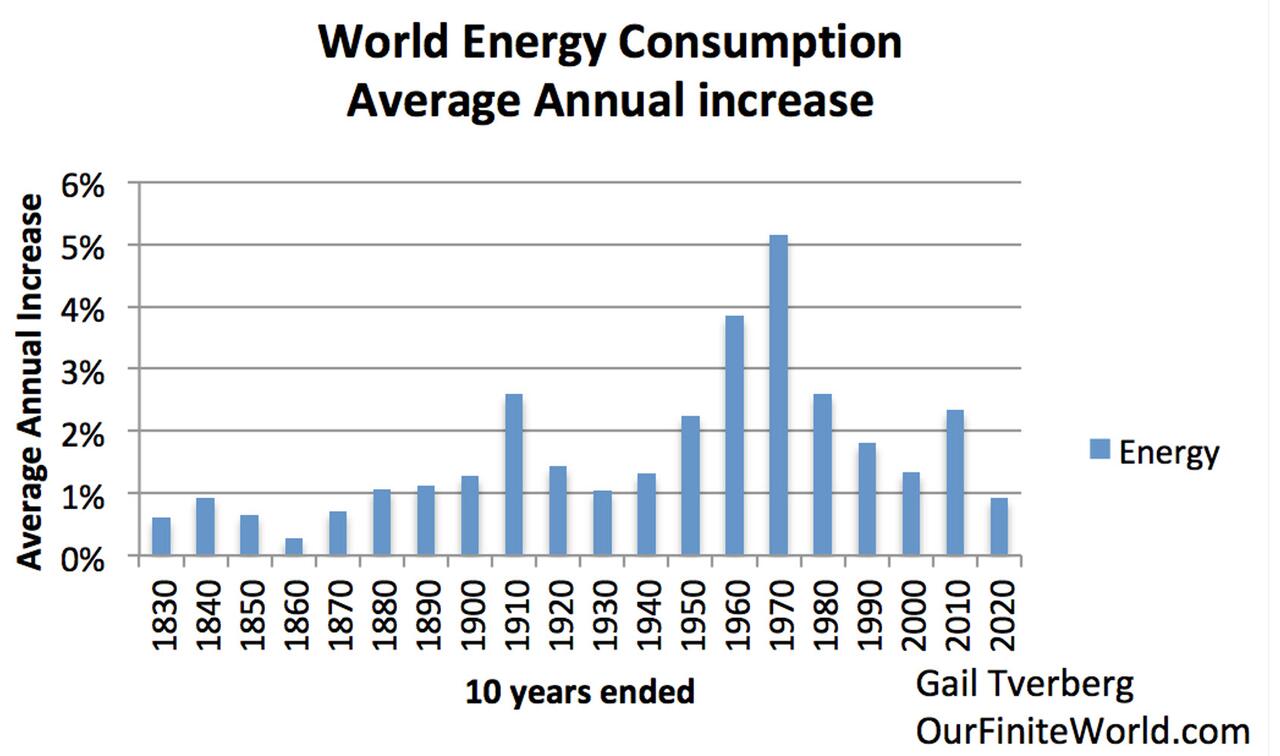
“My analysis shows how important increased energy consumption has been to economic growth over the last 200 years. Energy consumption per capita has been growing during this entire period, except during times of serious economic distress.”
The energy situation at the time of rising interest rates in the 1960 to 1980 period was very different from today.
“The main differences between that period leading up to 1980 and now are the following:
“The big problem in the 1970s was spiking crude oil prices. Now, our problems seem to be spiking crude oil, natural gas and coal prices.”
“In the 1970s, there were many solutions to the crude oil problem, practically right around the corner.”
“In the earlier of these periods (especially prior to 1973), it was easy to extract oil, coal and natural gas inexpensively. Inflation-adjusted oil prices of less than $20 per barrel were typical.”
“While higher interest rates could be expected to slow the economy, this was of little concern because rapid growth seemed to be inevitable. The supply of finished goods and services made by the economy was growing rapidly, even with headwinds from the higher interest rates.”
“On the other hand, in the 2008 to 2020 period, economic growth is largely the result of financial manipulation. The system has been flooded with increasing amounts of debt at ever lower interest rates.”
“If headwinds from higher interest rates and QT are added, the economic system is likely to encounter substantial debt defaults and increasing breakdowns of supply lines.”
TUDOR PLACE: What few Americans fail VISCERALLY to realize is that THE OPERATIVE BASELINE of what we’ve come to regard as REALITY has DRAMATICALLY SHIFTED. Until recently, we never had to THINK ABOUT switching on a light or turning the ignition key. But WE DO NOW.
And if we don’t, WE’D BETTER.
“Today’s spiking energy prices appear to be much more closely related to the problems of the 1913 to 1945 era than they are to the problems of the late 1970s.”
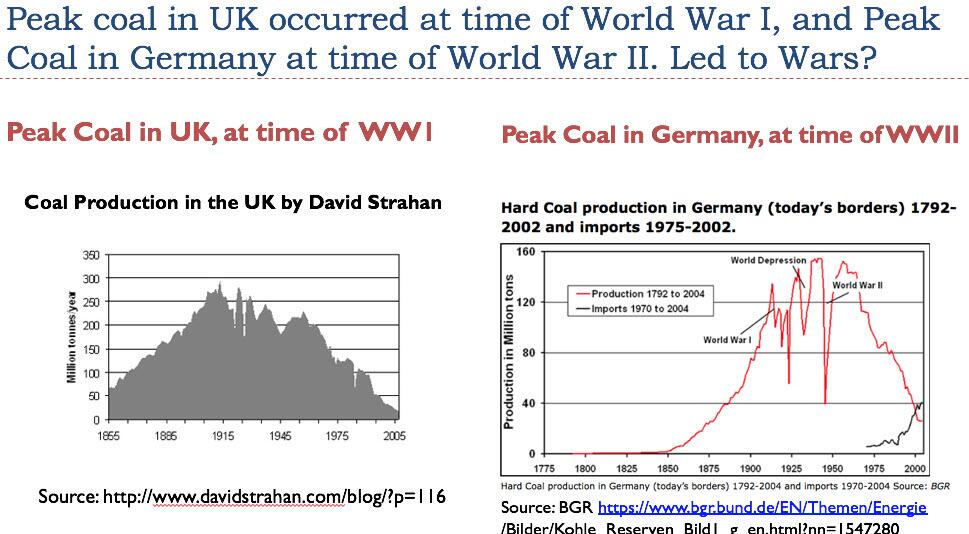
“In the 1913 to 1945 period, the problem was coal. Mines were becoming increasingly depleted, but raising coal prices to pay for the higher cost of extracting coal from depleted mines tended to make the coal prohibitively expensive.”
“There are other parallels to the 1913 to 1945 period. One of the big problems of the 1930s was prices that would not rise high enough for farmers to make a profit. Oil prices in the United States were extraordinarily low then.”
“Another major problem of the 1930s was huge income disparity. Wide income disparity is again an issue today, thanks increased specialization. Competition with unskilled workers in low wage countries is also an issue.”
“It is important to note that the big problem of the 1930s was deflation rather than inflation, as the debt bubble started popping in 1929.”
TUDOR PLACE: As Gail points out, much of what’s now on the HORIZON, we’ve seen before. Or at least our great-grandparents, grandparents and parents did.
Boom and bust cycles have been a REBALANCING FEATURE OF MODERN ECONOMIES since the dawn of MERCANTILE CAPITALISM. The last one peaked at the turn of this century and was marked by
a) the dotcom collapse which dispelled the notion that the BUSINESS CYCLE HAD ENDED;
b) 9-11 which in launching an era of both VIRAL and INCREASINGLY VIRTUAL ethno-politico-economic terrorism, revealed THE DARKER FEATURES OF GLOBALIZATION; and
c) the Enron and WorldCom bankruptcies which highlighted steadily increasing instances of CORPORATE MALFEASANCE, MISFEASANCE and NONFEASANCE — as well as RAMPANT OUTRIGHT FRAUD.
Back to Gail:
“If a person looks only at the outcome of raising interest rates in the 1960s to 1980 timeframe, it is easy to get a misleading idea of the impact of increased interest rates now.”
“The world economy was growing well before the interest rates were raised. After the peak in interest rates, the world economy generally continued to grow. As a result of the high oil prices and the spiking interest rates, the world hastened its transition to using a bit less crude oil per person.”
“At the same time, the world economy was able to expand the use of other energy products, at least through 2018.”
“A more relevant recent example with respect to the expected impact of rising interest rates is the impact of the increase in US short-term interest rates in the 2004 to 2007 period. This led to the subprime debt collapse in the US, associated with the Great Recession of 2008-2009.”
“The situation we are facing today is much more severe than in 2008. The debt bubble is much larger. The shortage of energy products has spread beyond oil to coal and natural gas, as well.”
“The idea of raising interest rates today is very much like going into the Great Depression and deciding to raise interest rates because bankers don’t feel like they are getting an adequate share of the goods and services produced by the economy. If there really aren’t enough goods and services for everyone, giving lenders a larger share of the total supply cannot work out well.”
TUDOR PLACE: Here’s where I part company with Gail. While raising interest rates WILL NO DOUBT TANK THE ECONOMY PRECIPTATING WHAT COULD BE AN UNPRECEDENTED DEFLATIONALRY COLLAPSE, THE ALTERNATIVE IS RUNAWAY INFLATION THAT WILL PAUPER US ALL — INCLUDING THE “ALMIGHTY AMERICAN CONSUMER.”
Since UNACCEPTABLY HIGH INFLATION, let alone HYPERINFLATION, will only result in TERMINAL DEFLATION anyway, better to come to terms with deflation in the NEAR TERM while REBUILDING OUR ECONOMY IN THE FACE OF IT — which will require, of course, REFLATING.
I mean, can we skip the INFLATION APPETIZER?
Gail summing up:
“The problems we are encountering have been hidden for many years by an outdated understanding of how the economy operates.”
“People almost invariably assume that all aspects of the economy can “stay together” regardless of whether there are shortages of energy or of other products. People also assume that shortages will be immediately become obvious through high prices, without realizing the huge role interest rates and debt levels play. People further assume that these spiking prices will somehow bring about greater supply, and the whole system will go on as before.”
“We cannot assume that reported reserves of anything can really be extracted, even if the reserves have been audited by a reliable auditor. What actually can be extracted depends on prices staying high enough to generate funds for additional investment as required.”
“The amount that can be extracted also depends on the continuation of international supply lines providing goods such as steel pipe. The continued existence of governments that can keep order in the areas where extraction is to take place is important, as well.”
“What we should be most concerned about is a very rapidly shrinking economic system that cannot accommodate very many people.”
TUDOR CITY: For some, the wheels WILL COMPLETELY COME OFF. Others will face deep sacrifices. The LUCKY will merely be INCONVENIENCED. But for us Americans, that’s a PRETTY LOW BAR.









 Tudor Place
