Efforts to Cleanse the Environment . . .

. . . Can Lead to Unintended Consequences.

Study Finds that Cleaner Air Leads to More Atlantic Hurricanes

A few highlights:

  • “Cleaner air in United States and Europe is brewing more Atlantic hurricanesa new U.S. government study found.”
  • “A 50% decrease in pollution particles and droplets in Europe and the U.S. is linked to a 33% increase in Atlantic storm formation in the past couple decades, while the opposite is happening in the Pacific with more pollution and fewer typhoons, according to the study published in Wednesday’s Science Advances.”

WELL, HELL’S BELLS.

  • “In the Atlantic, aerosol pollution peaked around 1980 and has been dropping steadily since. That means the cooling that masked some of the greenhouse gas warming is going away, so sea surface temperatures are increasing even more . . . .”
  • “While aerosol cooling is maybe half to one-third smaller than the warming from greenhouse gases, it is about twice as effective in reducing tropical cyclone intensity compared to warming increasing it . . . .”
  • “As aerosol pollution stays at low levels in the Atlantic and greenhouse gas emissions grow, climate change’s impact on storms will increase in the future and become more prominent  . . . .”

TALK ABOUT A PERFECT STORM.

Housing Market Collapsing?

You tell ME.

If it walks like a duck . . . .

Winter LNG Crisis in Europe?

Via Rystad Energy

A liquified natural gas (LNG) crisis is brewing for European countries dealing with energy insecurity in the wake of Russia’s invasion of Ukraine, as demand will outstrip supply by the end of this year,” Rystad Energy research shows.

There simply is not enough LNG around to meet demand. In the short term this will make for a hard winter in Europe. For producers, it suggests the next LNG boom is here, but it will arrive too late to meet the sharp spike in demand. The stage is set for a sustained supply deficit, high prices, extreme volatility, bullish markets, and heightened LNG geopolitics,” says Kaushal Ramesh, senior analyst for Gas and LNG at Rystad Energy.

No wonder certain European countries are seeking peace.

Energy Transition: The Reality

From the Wall Street Journal:

Things are not working as planned in the green economy as power grids are becoming unstable by the retirement of fossil fuel power plants with unstable renewables. The transition isn’t as smooth as climate change modelers once suggested as grid stability worsens, and millions of Americans could be subjected to blackouts this summer as cooling demand soars during heatwaves as grids won’t have enough power to meet demand.” 

Honestly, what did the GREEN FAITHFUL think? That we’d flip off one energy switch and flip on another in a kind of seamless switch-switching DANCE STEP?

Like Edison turning on the electricity switch for the first time at the old New York Times building on Park Row in 1882?

I guess so.

Well, it’s NOT 1882, petroleum as an energy source is more than a mere 23 years old, and the US is NO LONGER THAT COUNTRY.

What needs renewing is our ANALYSIS of CONDITIONS ON THE GROUND.

The Reason Gasoline Costs So Much

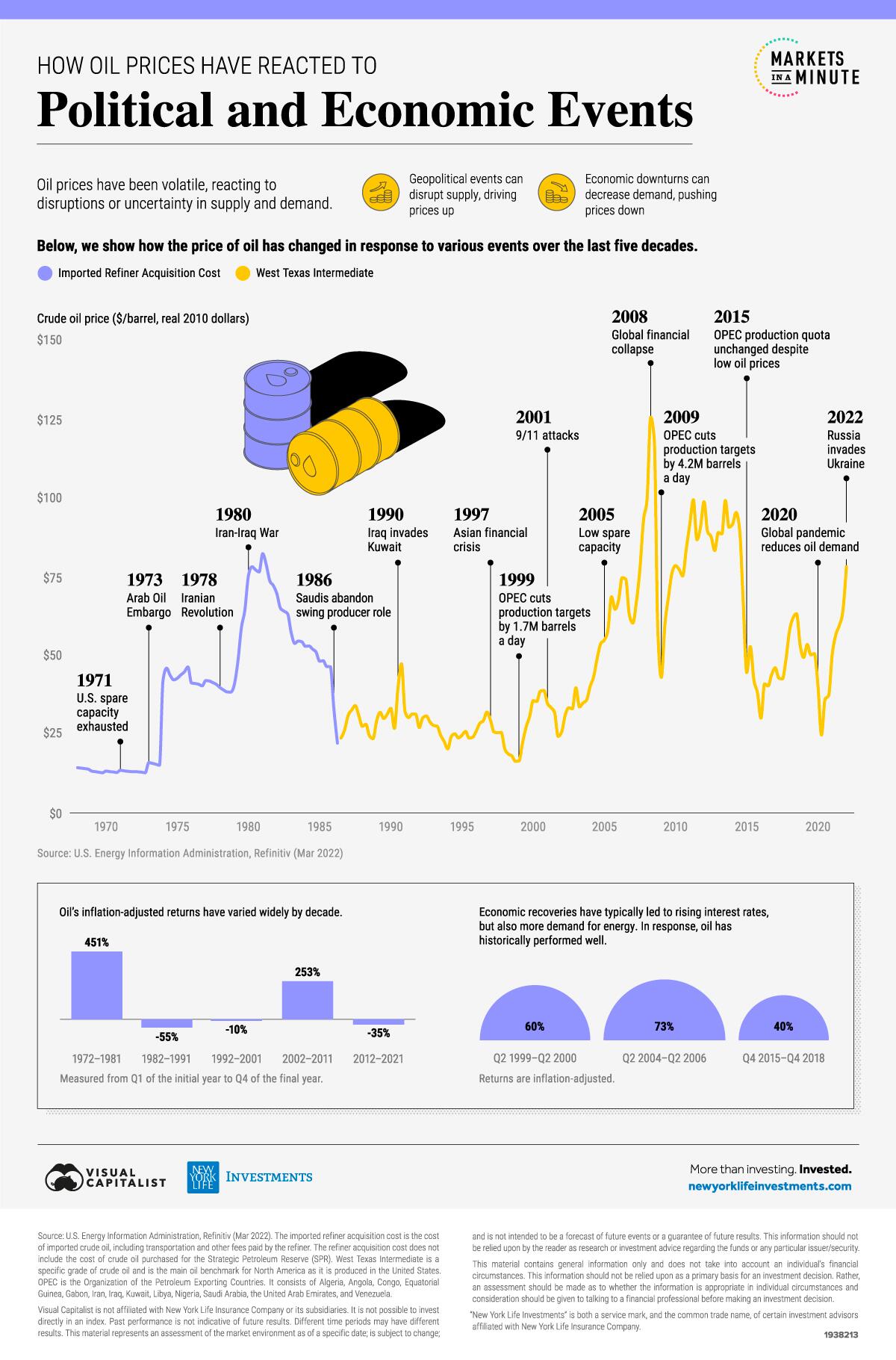
In terms of retail prices for refined products, oil may as well be trading at $250 a barrel.

Why?

Refinery margins have EXPLODED.

From Bloomberg:

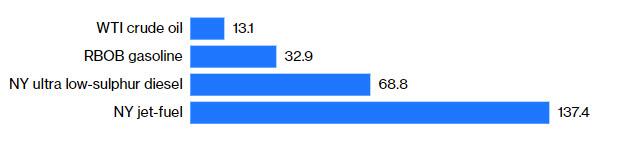
Refined oil products have risen between 30% and nearly 140% since Russia invaded Ukraine in late February, compared to less than 15% for crude.”

Take jet-fuel: in New York harbor, a key hub, it’s changing hands at the equivalent to $275 per barrel. Diesel isn’t far away, at about $175 a barrel. And gasoline is at about $155 a barrel. Those are wholesale prices, before you add taxes and marketing margins.

Oil refiners are enjoying the best ever processing margins, lifting the cost of fuels such as gasoline, diesel and jet-fuel well above that of crude.”

Oh, and try eliminating the middleman/refiner.

Yes, this is a NO DISINTERMEDIATION zone.

Will Eurasia Prevail?

Michael Every of Rabobank THINKS NOT. 

In this two-part video interview with Adam Taggart, Every argues that, DESPITE SERIOUS STRUCTURAL CHALLENGES FACING THE US AND THE GREATER WEST, China and Russia are at least EQUALLY and perhaps even MORE VULNERABLE.

And, POSSIBLY, MORE LIKELY TO COLLAPSE.

Here are my notes:

  • The global economy is reverting to militaristic mercantilism.
  • Yet, the West still holds more cards.
  • The Fed may have to keep hiking because of geopolitics alone.
  • Normally, only if a country has a trade surplus, can it still print.
  • Japan is the trade-surplus test case, and it’s proving the rule.
  • It’s begun running a trade deficit, and the yen is collapsing.
  • The US is the only country that can run a large trade deficit.
  • If the US Dollar remains primary, the Fed can keep cutting.
  • If the US stumbles, bond yields are likely to spike.
  • The US will fight to retain primacy and can do so even if its sphere of operation shrinks.
  • The US Dollar would still control enough of the world “to rule.”
  • For countries outside the US orbit, the outcome could be calamitous.
  • The global supply chain is seriously overextended.
  • The reality of this is only just hitting markets.
  • As critical supplies — including food — fail to reach their destinations, a Global Spring, much like the Arab Spring of some years ago, could occur.
  • Systems can adapt, but only if there’s competent leadership.
  • Flush Western countries should share their surpluses.
  • Russia, on the other side, is willing to do this; why allow them this advantage?
  • We’re moving beyond populism as nationalists of the world unite.
  • Europe and the US have gotten closer.
  • The West is coalescing against the rest.
  • But who else can the West attract?
  • The China/Russia axis is daunting.
  • But China and Russia don’t work well in many ways.
  • If Russia loses Western markets, China will only buy from it at heavily discounted prices.
  • Russia also relies heavily on Western supply chains and spare parts.
  • The more China helps Russia, the more the West parts ways with China.
  • There will be no workable Russian gold-backed currency; its economy is too weak.
  • As for China, its economic structure consists of over-investment, property bubbles and fiscal deficits.
  • As per credit creation, China is doing on stilts what the US is doing.
  • The US will adapt, China can’t.
  • China will have to pick a side, and it’ll choose China.
  • Because it’s in a no-win situation.
  • It can’t alienate either Russia or the US.
  • And it has additional problems, such as demographics.
  • Chinese fertility rates show China’s population shrinking by ONE BILLION by the end of this century.
  • China also has a debt problem.
  • And to top it off, exports can’t grow; and no one trusts its stock market.
  • China is drifting towards the Japanese “stagnation model.”
  • For investors, the only attractive assets now are commodities and the US Dollar.
  • It’s not about demand, it’s about supply. Can we control it?
  • Reshoring and friend-shoring now become critical; countries must pick the right team.
  • Investing in defense firms has now become attractive and will remain so for years.
  • Traditional militaristic mercantilism favors the West.
  • The West can onshore and maintain its military superiority.
  • What are commodity producers going to sell to each other – merely other commodities?
  • China and Russia need technology.
  • Be wary of volatility in all asset classes and markets.
  • There’s no case for gold if the Fed is hiking.
  • To buy gold is not to back Team-USA but instead Team Commodities.

PLENTY TO TAKE ON BOARD HERE, PARTICULARLY FOR A GOLD-HOLDER, SUCH AS ME.  FRANKLY, I’VE BEGUN PLANNING MY HEDGES ALREADY.  OR WOULD THAT BE — PLANTING THEM?